Showing posts with label Research. Show all posts

Sunday, 12 January 2014

Page Furniture/ Design Elements

Page furniture is made up of small decorative elements, which create a more interesting and visually pleasing professional setup. They also help unify house style and make your magazine stand out above the others. They can vary from drop caps, to watermarks behind text. The overall aim is to achieve a more interesting and eye-catching spread.

There are all types of design elements such as: drops caps, watermarks, embellishments, borders, typography and shapes and clipart. Design elements give magazine an edge above others, making them unique and recognisable.


 After all my research I have realised that I would like to include a few design elements of my own, to ensure that my magazine is professional and has high levels of realism. I have made a short clip of a few page furniture designs I am going to ensure I include in my magazine.


Font/Masthead/Typography


Analysis:

The masthead is one of the most important things to a magazine front cover. It is the first thing that the consumer will see, therefore needs to be bold and eye-catching. As you can tell all of the above mastheads use strong bold colours meaning that they are instantly recgoniable. As well as using strong, bold colours, they also use block colours, making them stand out more, empathising the effect. They also all use very sharp, bold fonts. All of the fonts are used to enhance the mastheads, ensuring its the first thing the costumers see. All of the titles are short and therefore straight to the point. This could insinuate that their magazines follow the same principals, meaning that they can be easily processed. 

Also mastheads such as 'Kerrang', use design elements in their title. Keerang has an affect that makes the text look shattered, or breaking apart. This connotes to imply that the magazine is going to be quite edgy and sharp, which is exactly what it is. It also has an explanation mark at the end, again connoting it is a bold, sharp magazine. That it contains music that makes a statement and is very different and rocky. Therefor after taking into consideration my research, I will be ensuring that my masthead has very bold, block colours. 

I will also ensure that the font is either blocked and bold, enabling it to be very eye-catching or include a design element to give it a unique look, that would make it stand out on the self compared to any other magazine.

Audience Expectations

Audience expectations are the advanced ideas the audience expect to see in the magazine. This particularly applies tot the genre pieces. You can play on and shatter the audience expectations, to gain more or less consumers. For the type of magazine I am creating, I have decided to agree with my audience expectations and use information such as my audience favourite music, and experiences to ensure that I meet my audiences needs/expectations.


From my research results of my audience expectations, I have included some examples of the types of music they listen too, types of things they do, and therefore the types of ideas I will include in my music magazine (below.)


The type of music my audience would expect to appear in the magazine are songs and artists suggested in the playlist below:


My target audience would expect to see articles based on upcoming artists and the new comping trends of electronic music:


Music Genre Research

My chosen music genre for my magazine is dance.

I have picked dance as a genre, however not forgetting many sub genres within. I will be focusing on drum and bass, trance, dub-step, and disco genres as well as dance itself. 

Brief History

Dance music originates from the 1970s by using computer generated sounds and synthesized sounds. The roots of dance music are Jamaican dub, Funk, Disco and European synth-pop. They are all styles of new instrumental versions of songs made by remixing. They mix different elements of the songs to be pushed backwards and forwards within the song. They add effects like echos and reverbs and increase the speed to make the songs more dance like. The most famous synthesized song was Donna Summers 'I feel love.' There are several techneqiues used to create the electronic tones and they add severeal effects to make the song sound computerised. Techneqiues used in such songs have been continued to carry on in electro and house music, evolving from the originals of dance. As time passes dance music has evolved with drum and bass/rave and trance music becoming highly popular in the last decade.


Donna Summer - I feel love


Martin Garrix - Animals


Artists

There are several artists that have released singles in the dance genre, far to many to write. I will list the 10 most common, and recent artists to date. The dance genre it a very competitive genre, with several artists doing a lot better than others, however it is also a very popular genre with the general public.

1) AVICII
2) CHASE AND STATUS
3) SUB FOCUS
4) WILKINSON
5) AFROJACK
6) RUDIMENTAL
7) CALVIN HARRIS
8) DISCLOSURE
9) DJ FRESH
10) BREACH


Iconography


Iconic images associated with dance music range in many different ways. At the start of the evolution of dance, it was all about sparkly clothing, flared jeans and platformed shoes. The iconography has not necessarily changed that much, only evolved into common day trends. Now it is associated with dj, electronics, raves, lights, festivals, and alcohol.


Understanding type of shot


I have researched the three main types of shots used for a front page cover image: close-up, medium shot and long shot. I have given both advantages and disadvantages to all three and also concluded to what shot i will use and why I have used that shot. I have included examples of all three types of shots used in magazines in my chosen genre and looked at what types of mages work the best and why.

House Style


How is House Style established?


House Style is one of the most important elements to a successful magazine you need to ensure that your magazine is recognisable within itself. If the magazine was pulled apart you should still be able to tell what pages belong to which magazine. Magazines achieve this by using unique page design elements that distinguish their magazines from others. Many have specific fonts to their magazines that make it instantly recognisable where as other have logos and design elements such as arrows pointing to the next page. Despite all the different variations of house style elements whatever they use should make their magazine unique to others, but similar to their own. The front page, contents page, and articles within, should all have either very similar colours, layouts or features.

It is established by keeping the colour scheme and typography the same and fluent throughout the magazine. It enables the read to feel continuous and comfortable. If there is no house style then the magazine feels jumbled and out of place. By keeping a visually pleasing house style, means the magazine becomes more recognisable and easier to establish from other magazines.

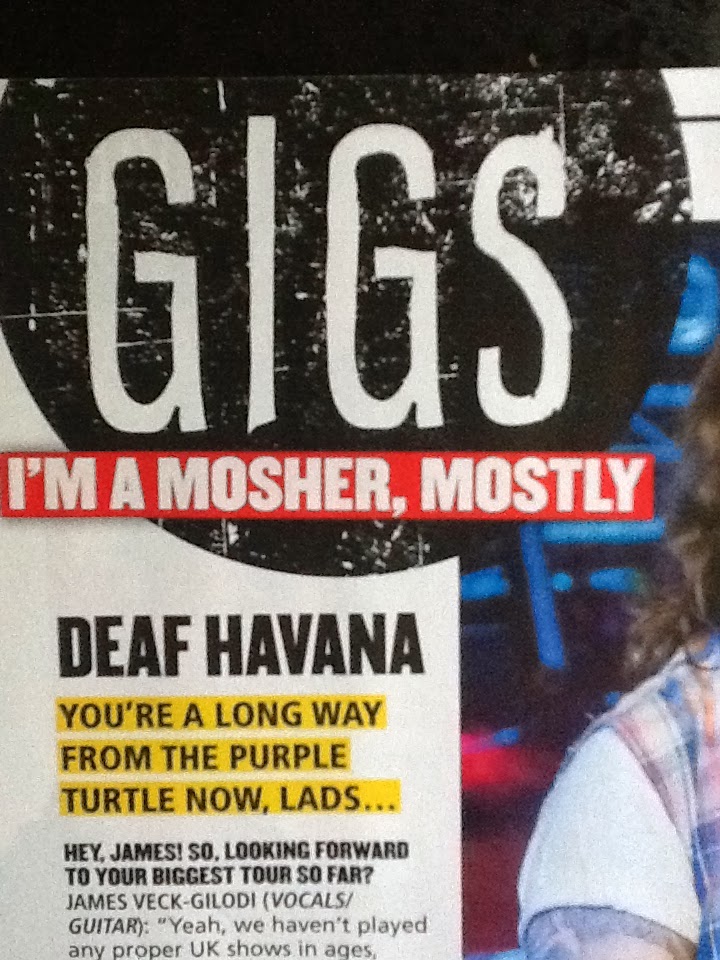
Kerrang has a traditional colour scheme of black red and yellow. This is shown repeatedly throughout the magazine showing a strong continuous house style. Even for text, titles, layouts and backgrounds the colour scheme is kept the same to indicate the fluency. 


As well as colour schemes, they also keep the same typography. They keep the same design elements throughout the magazine, E.g. like the background and font used for the sub titles of each page/section of the magazine. By doing this you can easily tell that all the stories are from the same magazine.


They keep the same font throughout the magazine, this clearly indicates that they are again all from the same house style. The articles all flow from each other, keeping fluency throughout the magazine once again. The font size is kept the same for the double page spread articles to identify the difference between the articles.


Therefore from my research I have discovered that keeping a fluent house style is very important and one of the key objectives to ensuring I have a successful magazine. It will ensure that my magazine is kept professional and can achieve the maximum levels of realism.


Target Audience Response


I wanted to receive my own primary research for my target audience, so I created a questionnaire I was going to ask 20 people, that I could receive more of an accurate judgement on my target audience. I will conclude all the results and take the mode from all my answers. I will still keep in mind all answers but i will go with the mode and average.

Questionnaire:

Results:


From my results I now have a more detailed idea of what my target audience are interested in. I can clearly indicate that my main age bracket to aim my magazine at are 16-19 years old. However there are still a little bit of interested in 13-15 years old and 19-22 years old. Therefore the age group i will be aiming at is 15-20. I also can prove that all of my target audience listen to dance music, which means i have a picked the correct genre to aim at my target audience. I can also tell that most of my target audience do not use tumblr, or Facebook, however sites like twitter, Instagram, Youtube and soundcloud are very popularly used. I can also tell that my target audience group take a it of care in what they wear as the most popular shops that my target audience shop in are Topshop/Topman, RiverIsland and Bank. All of these shops are very popular fashion brands, showing that my target audience like to keep on trend with their appearance. I can also see that 80% of my target audience like to shop online, proving that they use technology a lot, which is a key detail to keep in mind when creating my magazine. My target audience favourite artist at the moment appears to be Chase and Status. This proves that they are more interested in electronic artists now and starting to move on from people like David Guetta and Calvin Harris. I can also see that from my feedback, they love gong to concerts and festivals and many of them wish to attend Creamfields and Ultra festival. I will keep this in mind when creating  my magazine, so I can relate my content around this. My target audience watch on average around 1-3 hours of watching television and 10-30 minutes reading newspapers and magazines a day, proving that they do like to spend a little time relaxing but also spend a lot of their time out, seeing friends, going to parties, and listening to music.

Sunday, 5 January 2014

Pricing Research


From my research I have realised that the more pages, the more expensive the pricing is and the less frequent the magazine comes out. For example Mixmag and Q magazine both have over 100 pages, and cost over £3.50, yet are published every month, whereas Kerrang and NME magazine have less than 70 pages and both cost less then £2.50, but are published weekly. Therefore I have concluded that with the help of my research I am going to publish my magazine weekly, and have less content within. I will have a limited amount of stories, enabling me to keep my page count to under 80. Therefore i am planning to charge people £2.40 for my magazine, which i think is reasonable considering my frequency and page count.

Thursday, 2 January 2014

Final Magazine Name

After all consideration I finally needed to decide on what I wanted to name my magazine. I started with 8 potential names of Vibe, Free, Volume, Replay, Voice, Play, Octave and Sync. I then asked 37 people what they preferred as the best name and what they think would best suit my magazine knowing my genre of dance music. 


From my results I can see that the top 5 names were Vibe, Volume, Play, Voice, Sync. I then decided to develop these 5 options either further and used the thesaurus to see syonmmons to see if I could find any alternatives. I decided not to look into alternatives for volume as they were not appropriate or worth considering.


From my further research none of the supplied alternatives were really appropriate, (see in previous post) or what I thought to better than my selection already. Therefore instead of changing the words I decided to play with graphical elements. I started with changing the 'a' in Play to a play symbol, changing the 'e' in volume to a speaker and making the whole of 'sync' uppercase.


After I then asked people what they preferred out of my three final options. The feedback I received was very controversial. Some people preferred play, due to its graphical elements, where as others preferred the others for their uniqueness and individuality.


From the feedback I received the most positive came from Play, however after i trialled the names against possible front page photos in photoshop, I realised that Sync was in fact the most visually pleasing, therefore I have concluded to SYNC as my final magazine name.

Monday, 9 December 2013

Target Audience Research

Target Audience


I went away and interviewed a selection of people that i considered to be my target audience. I have come to the conclusion that i will be aiming my magazine at the 'mainstream' segment of the market.I personally am interested in house/dance music myself, so feel that this is a perfect genre of music for me to pursue as i have a lot of knowledge and background in the genre myself.


Firstly I looked into the types of clothing and outfits that my target audience would wear. This would be a major help and indiction to what to dress my models in for my magazine. I looked at outfits for nights out, and casual day outfits for both summer and winter. I looked at what types of hairstyles people wore, what tops, trousers, jackets people wore and where an for what occasion they would wear that outfit. This way I could ensure that the outfit i use for my models on my magazine would fit ideally in with my target audience.

I wrote up a list of questions to ask my interviewees, which were targeted to withdraw information about their personalities, clothing, hobbies, interests, and musical tastes. I got a similar range of responses which clearly identified that they fit in with the genre of my magazine. 


I then looked into Channel 4's research on social groups using the site
'UK Tribes.' It allowed me to look into more depth about my target audience. 
When looking into the 'Mainstream' segment there were seven clear categories: 
-Blingers
-Boy Racers
-Chavs
-Chavers
-Fan girls
-Townies
-Sports junkies
Despite aiming for the mainstream segment my main two focuses will be around 'townies' and 'chavers.' They are based as the regular kids around the high streets.

'Townies are as mainstream as you can get – it’s the default ‘normal’ Tribe and the core of the British youth population…' Townies simply go with the flow, keeping up to date with the latest celebrity gossip, and who is number one in the chart. They love to drink and live for the weekend and may smoke a little weed but do not experiment with drugs like chavers do. Townies care about their fashion but not as much as Hipsters or Trendies. Often refered to as the 'sheep' of the culture, with no idenitity they simply follow dominant trends, therefore i must insure that my magazine is current and up to date with common trends.


Fuelled by music, drugs and booze, Chavers live for bass and hedonism… 
Chavers live for bass music, live events and casual drugs. Found all across the UK they are the core of the commercial dance music scene. Found pressed up to the speakers, drink in hand, chavers live for a big night out. Chavers are influenced by bass music, making EDM (electronic dance music) very popular within this genre. Due to their overly busy social lives they are huge attenders to Global energy weekender, One Nation, Innovation in the Sun and most of all Creamfields. They usually live to have fun - not get in trouble.

Therefore after concluding through all my research i can conclude my target audience to the segment mainstream. I now know that I need to make sure that my magazine is up to date and fits in with all current trends if I want to optimise all factors to attract my target audience. I have picked my genre to be house/dance, to ensure that again it matches my target audiences preferences.